
Green vs. Started vs. Finished Horses: What They Mean and Cost
What "started", "green broke", "finished" and "prospect" mean in a horse ad, how training level changes the price, who each suits, and how to check one.
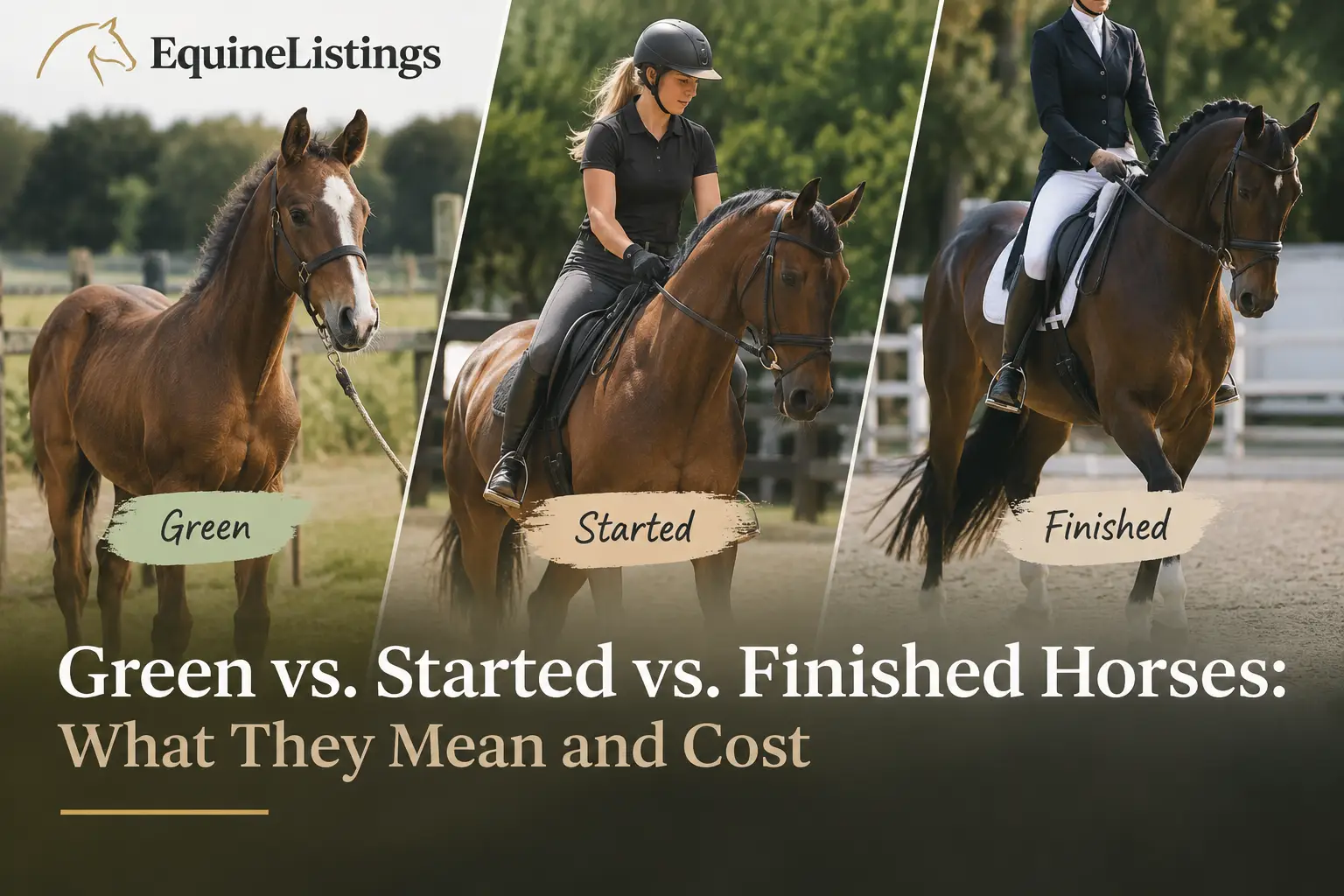
What Do "Started", "Green" and "Prospect" Mean in a Horse Ad?
A started horse has had its first rides under saddle and knows the basics, a green broke horse can be ridden but is still inexperienced and inconsistent, and a finished horse is fully trained and reliable for a particular job. A prospect is a young or unproven horse with the build, breeding or early training for a discipline, such as a trail, roping or reining prospect: it is sold on potential, not on a record.
Training level changes both the price and who the horse suits. In our review of more than 1,000 priced Quarter Horse ads listed across the US in the 90 days to November 2026, weanlings and yearlings had a median asking price of about $6,000, while horses aged 4 to 6, typically started or finished, had a median of about $12,500.
Key Takeaways
Unstarted < started < finished. Price usually rises with every level of training, because the buyer is paying for months or years of a trainer's work.
A prospect is potential, not proof. Ads describing a horse as a prospect had a median asking price of about $9,500, close to the overall median of about $9,000.
Green horses are not beginner horses. University extension specialists warn that an inexperienced rider should not buy an inexperienced horse.
Finished, seasoned horses hold their value. Ads describing horses as safe, seasoned or "been there, done that" had a median of about $10,000, and many sat well above it.
Always test what the ad claims. Ride the horse, watch it work at its job, and have a veterinarian examine it before you buy.
The Training Ladder: From Unstarted to Finished
Sellers use these words loosely, so treat them as a starting point and ask exactly what the horse has done.
Unstarted or halter broke: leads, ties, stands for grooming and the farrier, and may load in a trailer, but has not been ridden. Weanlings, yearlings and many 2-year-olds are in this group.
Started: has had its first rides, often 30 to 90 days with a trainer. It walks, trots and lopes, steers and stops at a basic level, and needs an experienced rider to keep progressing.
Green broke: can be ridden, but is inexperienced, may be inconsistent or easily confused, and still needs miles. Green broke and started are often used for the same stage.
Broke or well broke: reliable under saddle for general riding, with steady gaits and good brakes, but not specialized.
Finished: fully trained for a particular discipline, such as a finished barrel, reining or heel horse, and responds to refined cues.
Seasoned or "been there, done that": years of experience in many settings. These are the horses most likely to suit a newer or nervous rider.
How Much Do Started, Green and Finished Horses Cost?
Ads rarely state a training level in a consistent way, so age is the most reliable public guide to where a horse sits on the ladder. These figures come from 1,002 priced ads for registered (AQHA) Quarter Horses listed across the US on DreamHorse in the 90 days to 8 November 2026. Each line shows the median asking price and the middle half of ads.
Weanlings and yearlings, mostly unstarted (278 ads): median about $6,000, middle half about $4,500 to $8,500.
2 and 3 years old, often being started (144 ads): median about $10,000, middle half about $7,500 to $16,100.
4 to 6 years old, often started, green or finished (218 ads): median about $12,500, middle half about $8,500 to $20,000.
7 to 12 years old, mostly broke or finished (213 ads): median about $12,000, middle half about $7,500 to $19,500.
13 and older, often seasoned (149 ads): median about $6,750, middle half about $3,500 to $10,500.
Prices climb as training is added and peak for horses in their prime working years, then fall as horses age, even though older horses are often the steadiest. That makes a sound, seasoned teenager one of the best values for a newer rider.
Prospects and horses by discipline
Many ads name a job in their headline. Among the priced ads, those mentioning a discipline asked:
Roping, heading and heeling (28 ads): median about $15,000, middle half about $8,000 to $25,000.
Ranch (95 ads): median about $12,000, middle half about $9,000 to $20,000.
Barrel racing (34 ads): median about $11,750, middle half about $9,100 to $20,000.
Trail (83 ads): median about $10,000, middle half about $7,100 to $15,300.
Reining (25 ads): median about $10,000, middle half about $5,500 to $15,000.
Described as a prospect, any discipline (88 ads): median about $9,500, middle half about $6,500 to $16,600.
Cutting, cow horse, halter and western pleasure appeared in too few ads to give a reliable figure. For a broader picture of Quarter Horse prices, see our Quarter Horse price guide.
Which Training Level Is Right for You?
First horse or nervous rider: look for a seasoned, finished horse. Our beginner-safe horses guide explains what to look for.
Confident amateur: a broke or finished horse for your discipline, or a well-started horse if you have a trainer to help.
Experienced rider or trainer: a started or green horse, or a prospect, can be good value if you can put the training on yourself.
Breeder or long-term buyer: an unstarted prospect with strong bloodlines, bought knowing it will be years before it is finished.
The University of Nebraska's extension guide puts the rule simply: green plus green equals black and blue. Rutgers' equine extension specialist adds that young horses need an experienced rider to train them. Match the horse's experience to yours, not the other way round.
How to Check a Started or Green Horse
Ask how many rides it has had, with whom, and what it does now: walk, trot, lope, steering, stopping, backing.
Watch it caught, tacked and mounted before you ride, and see how it reacts to new things.
See it ridden first by the seller or trainer, then ride it yourself, ideally with your own trainer watching.
Ask for video of the horse working, especially for a prospect sold for a specific job.
Read the ad wording carefully: "needs a confident rider", "has some buck" or "not for beginners" are honest warnings, not decoration.
Book a pre-purchase exam. Our pre-purchase exam guide explains what it covers.
Put the terms in writing, including any trial period. See what an equine bill of sale must include.
Remember that a started horse still needs months of consistent riding, and many owners pay a trainer to finish one. Budget for that, on top of everyday costs such as boarding.
Find Started and Trained Horses for Sale
You can browse Quarter Horses for sale, trail horses for sale and all horses for sale on Equine Listings, and filter by age, discipline, price and location. Our first-time buyer guide covers the whole process.
Frequently Asked Questions
A started horse has had its first rides under saddle, often 30 to 90 days with a trainer. It knows the basics of walking, trotting, loping, steering and stopping, but it is not yet consistent and needs an experienced rider to keep progressing.
The Bottom Line
Unstarted, started, green, finished and seasoned describe how much training a horse has, and price usually rises with each step until a horse reaches its prime working years. A prospect is a promise, not a guarantee. Match the horse's training to your experience, test every claim in the ad, and budget for the training a started or green horse still needs.
Looking for a started or trained horse?
Browse horses for sale on Equine Listings and filter by age, discipline, price and location.
Sources
DreamHorse, AQHA Quarter Horses for sale, last 90 days (listing pages read on 8 November 2026)
Kathy P. Anderson, University of Nebraska–Lincoln Extension, Selecting the "Right" Horse for Youth or Adults (NebGuide G1540)
Karyn Malinowski, PhD, Rutgers Equine Science Center, Tips on Buying Your First Horse