How Much Does It Cost to Board a Horse? 2026 Guide
How much does it cost to board a horse? US monthly averages, the main types of board from pasture to full care, extra fees to ask about and how to choose a barn.
How Much Does It Cost to Board a Horse?
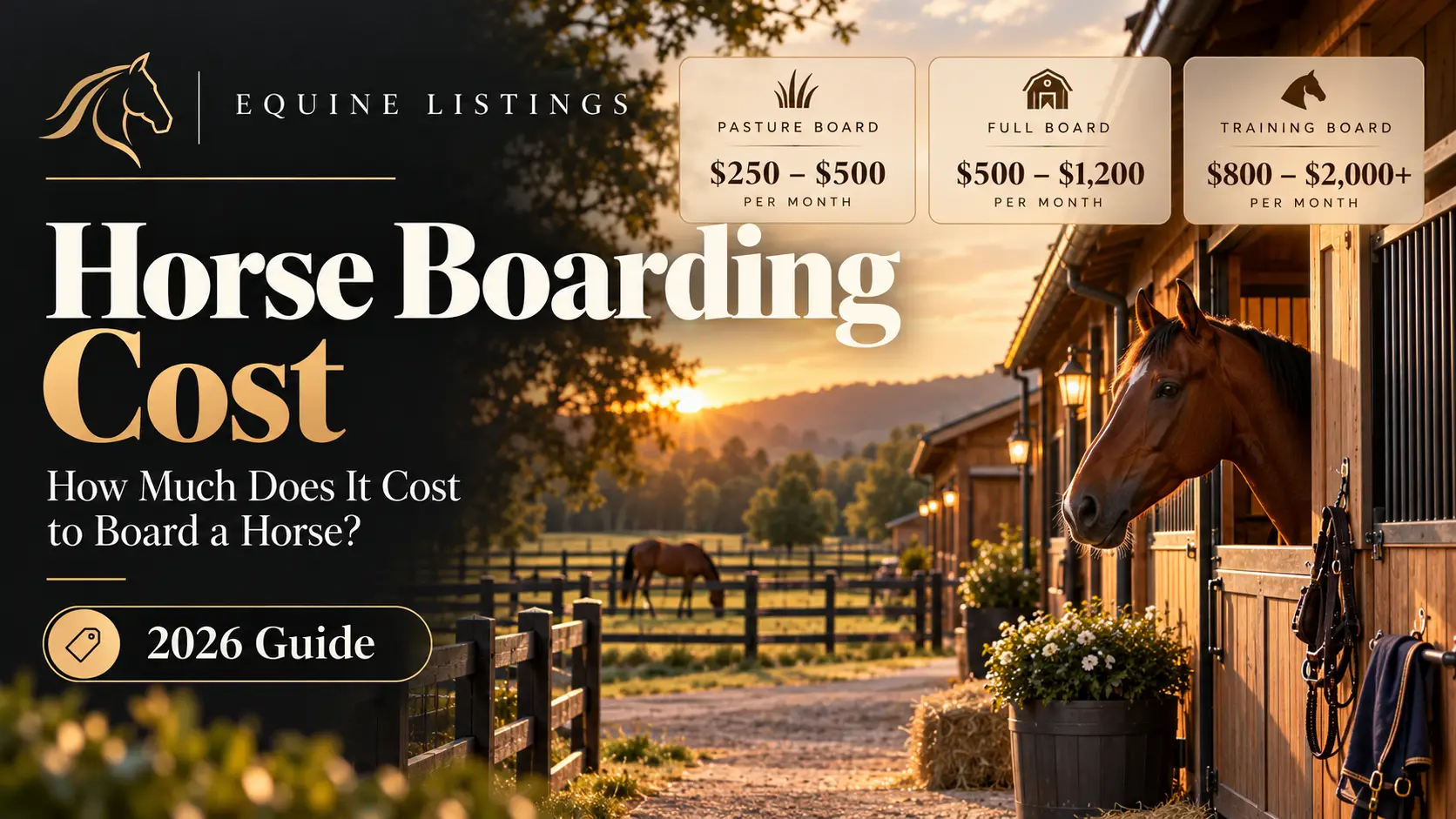
In the United States, owners who pay for boarding spend on average about $500 to $780 a month per horse, according to a 2023 national survey of 1,231 horse owners. The real range is far wider: basic pasture or self-care board in a rural area can cost a few hundred dollars a month, while full board at a show barn near a major city can pass $1,500. The type of board, the region and the services included decide where a barn falls.
This guide explains the main types of board, what drives the price, the extra fees to ask about, and how to choose a boarding barn.
Key Takeaways
National averages: owners who board spent an average of $5,946 a year (about $496 a month) for backyard or pastured horses, $6,311 (about $526 a month) for recreational horses and $9,324 (about $777 a month) for competition horses, in the 2023 Equine Lifetime of Care Study.
Location changes everything. Tennessee boarding facilities reported an average charge of about $481 a month per horse, while one South Florida barn charged $1,600 a month for full board, before lessons and training.
Type of board is the second big factor. Self-care and pasture board usually cost least, full board more, and training board the most.
The base rate is rarely the whole bill. Ask about fees for blanketing, supplements, holding for the vet or farrier, and arena use.
Get it in writing. A boarding agreement should spell out the services, notice period and who pays for what.
Average Monthly Boarding Costs in the US
There is no single national price, because a boarding barn sells a bundle of land, labor, feed and facilities, and each of those costs differs by region. The most useful national figures come from the 2023 Equine Lifetime of Care Study by Synchrony and CareCredit, which surveyed 1,231 US horse owners and was reported by The Horse. Among owners who pay for boarding:
Backyard or pastured horses: 25% of owners paid board, averaging $5,946 a year, or about $496 a month.
Recreational horses: 41% paid board, averaging $6,311 a year, or about $526 a month.
Competition horses: 53% paid board, averaging $9,324 a year, or about $777 a month.
Regional figures show how wide the spread is. A University of Tennessee study of 2021 data found that boarding facilities charged an average of $481.25 a month per horse. At the other end, a multidiscipline facility in South Florida quoted $1,600 a month for full board, with lessons and training extra.
Types of Horse Boarding
Boarding barns usually offer several levels of care. Names vary from barn to barn, so always ask exactly what is included.
Self-care board
You rent a stall, a paddock or both, and you do the daily work yourself: feeding, watering, mucking out and turnout. It is usually the cheapest option, but it costs time, and you need a plan for days when you cannot get to the barn.
Pasture board
The horse lives outside, typically with a shelter and herd mates, and the barn checks on it, provides water and usually feeds hay when grass runs short. It is often one of the most affordable options and suits many horses well, but ask whether hay is included in winter and whether a stall is available if the horse is sick or injured.
Partial board
The barn and the owner split the work, for example the barn feeds and turns out while you clean the stall on certain days. Prices sit between self-care and full board, and the details vary widely, so get the split in writing.
Full board
The barn handles daily care: feeding, hay, stall cleaning, turnout and basic checks. It costs more because you are paying for labor every day, but it frees your time and is the usual choice for owners who work full time or live far from the barn.
Training board
Full board plus regular training rides or sessions with a professional. It is the most expensive option and is usually priced as board plus a training fee.
What Affects the Price of Boarding?
Region and land costs: boarding near major cities and in expensive regions costs much more than in rural areas, as the Tennessee and South Florida figures show.
Facilities: an indoor arena, lit outdoor arenas, trails, wash racks and heated tack rooms raise the price.
Stall or pasture: keeping a horse in a stall needs bedding and daily cleaning, so stall board costs more than pasture board.
Feed and hay: hay prices vary by year and region. In Kentucky, small square bales cost $7 to $12 each in summer 2026, and a 1,000-pound horse eats roughly 20 to 25 pounds of hay a day.
Staff and care level: barns with staff on site around the clock, or that blanket, hand-walk or give medications, charge more.
Demand: barns near popular show circuits or with well-known trainers often have waiting lists and higher prices.
Extra Fees to Ask About
The monthly board rate is rarely the whole bill. Before you sign, ask whether these are included or charged separately:
Blanketing and fly-mask changes
Feeding your own supplements or grain
Holding the horse for the farrier or veterinarian
Giving medications or wound care
Individual turnout instead of group turnout
Arena or trail use, and trailer parking
Lessons, training rides and clinics
Liability insurance the barn requires you to carry
How to Choose a Boarding Barn
Visit more than once, including at feeding time, and look at the horses: their weight, coats and mood tell you more than the brochure.
Check water, fencing and shelter. Water should be clean and always available, fences safe and in good repair, and every horse should have shelter.
Ask about turnout and herd management, including how new horses are introduced.
Ask about emergency plans: who checks the horses at night, which veterinarian the barn uses, and how owners are contacted.
Ask about health requirements for vaccinations, deworming and Coggins tests, which protect your horse too.
Read the boarding agreement before you pay. It should set out the services, the price, notice to leave, and who is responsible for what.
You can find boarding stables and other equine services in our directory. If you are still working out the full cost of a horse, see how much a horse costs in the USA, and if you are shopping for one, our Quarter Horse price guide and first-time buyer guide cover the purchase. For cold months, our winter horse care guide explains hydration and forage.
Boarding vs. Keeping a Horse at Home
Keeping a horse at home avoids board but brings its own costs: land, fencing, shelter, hay storage, equipment, and your own time every day, plus a companion animal, because horses are herd animals. For many owners, boarding is the more practical choice even when it costs more on paper. Compare the two over a full year, including your time.
Frequently Asked Questions About Horse Boarding Costs
Owners who pay for boarding in the US spend on average about $500 to $780 a month per horse, according to the 2023 Equine Lifetime of Care Study of 1,231 owners. Basic pasture or self-care board in rural areas can cost a few hundred dollars a month, while full board at a show barn near a major city can pass $1,500.
The Bottom Line on Horse Boarding Costs
Plan on roughly $500 to $780 a month as a national average for a boarded horse, then adjust for where you live and the level of care you need: self-care and pasture board at the low end, full and training board at the top. Ask for every extra fee in writing, visit before you commit, and compare a few barns, because the right fit for your horse matters as much as the price.
Find boarding near you
Browse trainers, boarding stables, equine veterinarians, farriers and other equine services in the Equine Listings directory.
Sources
Karen Hopper Usher, The Horse, How Much Does It Cost to Own a Horse?, citing the Synchrony/CareCredit 2023 Equine Lifetime of Care Study, Olivia Watson's 2023 University of Tennessee thesis and Bob Coleman, PhD, University of Kentucky
Stephanie Stephens, Stable Management, Spring 2015 Stable Management Fees Survey (2015)