
Beginner-Safe Horses: How to Find a Kid-Safe Horse
How to find a beginner-safe, kid-safe horse: what to look for, how to test one, typical prices and red flags, plus beginner horses for sale.
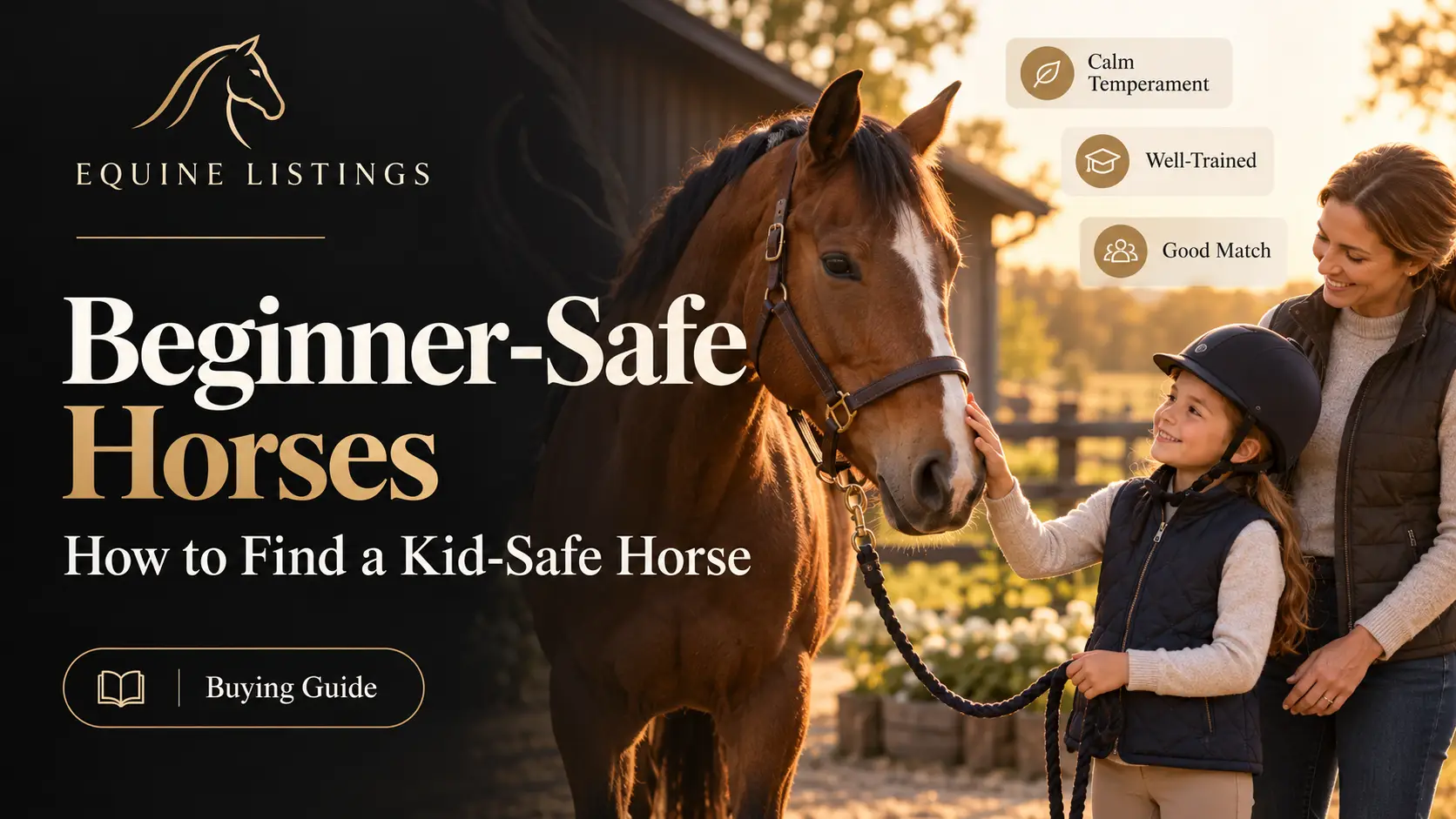
What Makes a Horse Beginner Safe?
A beginner-safe horse is usually an older, experienced, calm horse, very often a gelding, that has done the job you want for years and forgives a rider's mistakes. Extension horse specialists agree on the core rule: an inexperienced rider should not buy an inexperienced horse. The University of Nebraska puts it bluntly: green plus green equals black and blue.
This guide explains what to look for in a beginner or kid-safe horse, how to test one before you buy, what they typically cost, and the red flags that should send you elsewhere.
Key Takeaways
Choose experience over looks. An older horse that already does the job you want suits a beginner or child far better than a young or spirited one.
Geldings are usually the steadiest choice for riding, according to Rutgers University's equine extension specialist.
Test the horse properly. Watch the seller ride first, then handle and ride it yourself more than once, in more than one setting, with an experienced horseperson beside you.
Beginner-safe horses are often good value. Older, quiet horses usually cost less than young prospects. On Equine Listings in October 2026, nine of the ten horses listed as beginner or kid safe asked $3,000 to $5,500.
Always get a pre-purchase exam and put the sale, and any trial period, in writing.
The Qualities of a Beginner-Safe Horse
No horse is ever completely safe, and a reliable horse can still spook or misbehave. What buyers mean by beginner safe or kid safe is a horse that stays calm, responds to simple cues, stands quietly for handling, and does not overreact when a rider makes a mistake. Those qualities come mostly from age, experience and temperament, not from breed.
Age and experience
The University of Nebraska's extension guide advises first-time owners and young riders to choose an older horse that already has the skills they need, and to save young, green horses for when the rider wants more challenge. Rutgers adds that an older horse often costs less and has more training and experience than a younger one of similar quality. Many sound horses in their teens are ideal beginner partners.
Temperament
Watch the horse's eyes, ears and tail for signs of kindness or irritability, and see how it behaves in its stall, while being saddled and around other horses. A good beginner horse is curious but quiet, stands still while you mount, and settles quickly if something startles it.
Gender and size
For riding and showing, geldings are generally steadier and more reliable, according to Rutgers. Mares can be excellent too, but some show hormone-related mood changes. Stallions are not for beginners. The horse's size should also suit the rider: a smaller rider is often more confident on a smaller horse or pony.
Training for the job you want
A horse that is quiet on trails may not be calm in an arena, and the reverse. Look for a horse that has been doing what you plan to do, whether that is trail riding, lessons, or local shows.
How to Test a Beginner Horse Before Buying
Bring an experienced horseperson, ideally your riding instructor or trainer.
Watch the seller ride first, then ride it yourself, using the cues the horse knows.
Handle it on the ground: catch it, lead it, pick up its feet, groom and tack it up yourself.
Try it where you will use it: in the arena, on a trail and around distractions such as other horses, traffic or dogs.
Visit more than once, at different times of day, so you do not only see the horse after a long ride or a day off.
Ask for a short trial if the seller allows it. The Nebraska guide suggests about 7 to 10 days, with the terms in writing.
Avoid auctions for a first horse, because you usually cannot try the horse properly.
How Much Does a Beginner-Safe Horse Cost?
Beginner and kid-safe horses are often among the better-value horses on the market, because the qualities that make them safe come with age, and older horses usually cost less than young prospects. On Equine Listings in October 2026, the ten horses listed as beginner or kid safe asked $3,000 to $20,000. Nine of them asked $3,000 to $5,500, with a median of $4,000, and seven of the ten were 10 to 17 years old. The $20,000 horse was a registered 5-year-old with a lesson and mounted patrol background.
That is a small snapshot of one site, not a national average. For a wider picture of prices see how much a horse costs in the USA and our Quarter Horse price guide. Remember that the purchase price is the smaller number over time: boarding alone often costs $500 to $780 a month, as our horse boarding cost guide explains.
Not Ready to Buy? Consider Leasing
Rutgers advises riders to judge their skills honestly before buying, and notes that a few trail rides or about ten lessons may not be enough. If you are not ready, leasing a horse part-time or full-time lets you gain experience without carrying the full cost and responsibility. Lessons on a good school horse are another way to build the skills that make owning easier and safer.
Before You Pay
Have your own veterinarian perform a pre-purchase exam. Our pre-purchase exam guide explains what it covers.
Ask for vet and Coggins records, and confirm vaccinations and deworming.
Put the sale and any trial terms in writing. See what an equine bill of sale must include.
Plan ongoing lessons with a qualified instructor, even after you buy. A good horse stays good with a rider who keeps learning.
New to the whole process? Our first-time buyer guide walks through every step.
Find Beginner-Safe Horses for Sale
You can browse beginner horses for sale and kid-safe horses for sale on Equine Listings and filter by age, breed, price and location.
Frequently Asked Questions About Beginner-Safe Horses
Usually an older, experienced, calm horse, often a gelding, that has already done the job you want for years. Breed matters less than age, training and temperament. University extension specialists advise beginners not to buy a young or green horse.
The Bottom Line
The safest first horse is an experienced, calm, older horse that already does the job you want, tested properly, examined by a vet and bought with the terms in writing. Take your time, try several horses, bring an experienced friend or instructor, and keep taking lessons after you buy.
Looking for a beginner-safe horse?
Browse horses listed as beginner and kid safe on Equine Listings and compare them by age, breed, price and location.
Sources
Kathy P. Anderson, University of Nebraska–Lincoln Extension, Selecting the "Right" Horse for Youth or Adults (NebGuide G1540)
Karyn Malinowski, PhD, Rutgers Equine Science Center, Tips on Buying Your First Horse